
Window Film Care: When Bubbling, Peeling, or Other Changes Are a Problem

Every homeowner who has window film installed gets a slightly different set of care instructions, and that's normal. Manufacturer, film type, adhesive system, glass, and installation conditions all affect how a film cures and how it should be cleaned. If your instructions don't match what a friend was told by a different installer, neither set is necessarily wrong. It just means the two of you have different products. Follow the guidance your installer gave you for the exact film on your home, not advice meant for a different one.
Why Instructions Vary
"Window film" covers solar-control, decorative, privacy, exterior, and safety and security products, and these are built and installed quite differently from one another. A thin solar-control film behaves nothing like a thick, multi-layer security film, and an interior installation cures under different conditions than an exterior one. LLumar notes that drying time depends on factors like the weather, glass type, and film product, so a shaded window in cool weather cures differently than a sunny, west-facing window during a Utah summer. That's why generic advice found online shouldn't override instructions from your manufacturer or installer.
Cleaning Isn't One-Size-Fits-All
Most film is easy to clean once cured, but the approved products and wait times differ by brand:
- LLumar allows common household cleaners applied with a non-abrasive cloth or paper towel. Just avoid anything hard, sharp, or metallic that could gouge the surface.
- Madico recommends waiting 30 days before the first cleaning, then using only a soft cloth or rubber squeegee. It advises against brushes, pure ammonia, and industrial-strength or abrasive cleaners.
- 3M building films also call for a 30-day wait, approved glass cleaners only, and no knives, scrapers, or brushes.
The differences come down to each manufacturer's adhesive chemistry and film coating, so a product that's safe on one film could still damage another. When in doubt, use a soft microfiber cloth, skip anything abrasive, and check with your installer before trying an unfamiliar cleaning product.
What's Normal Right After Installation
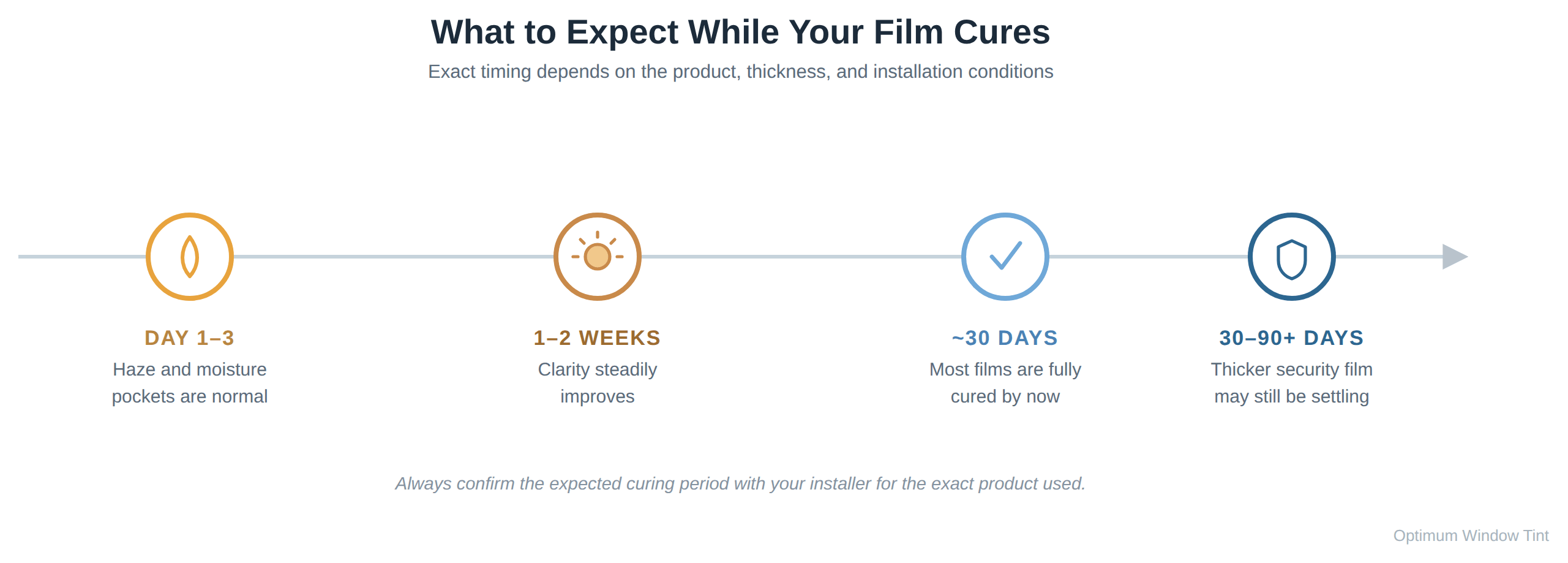
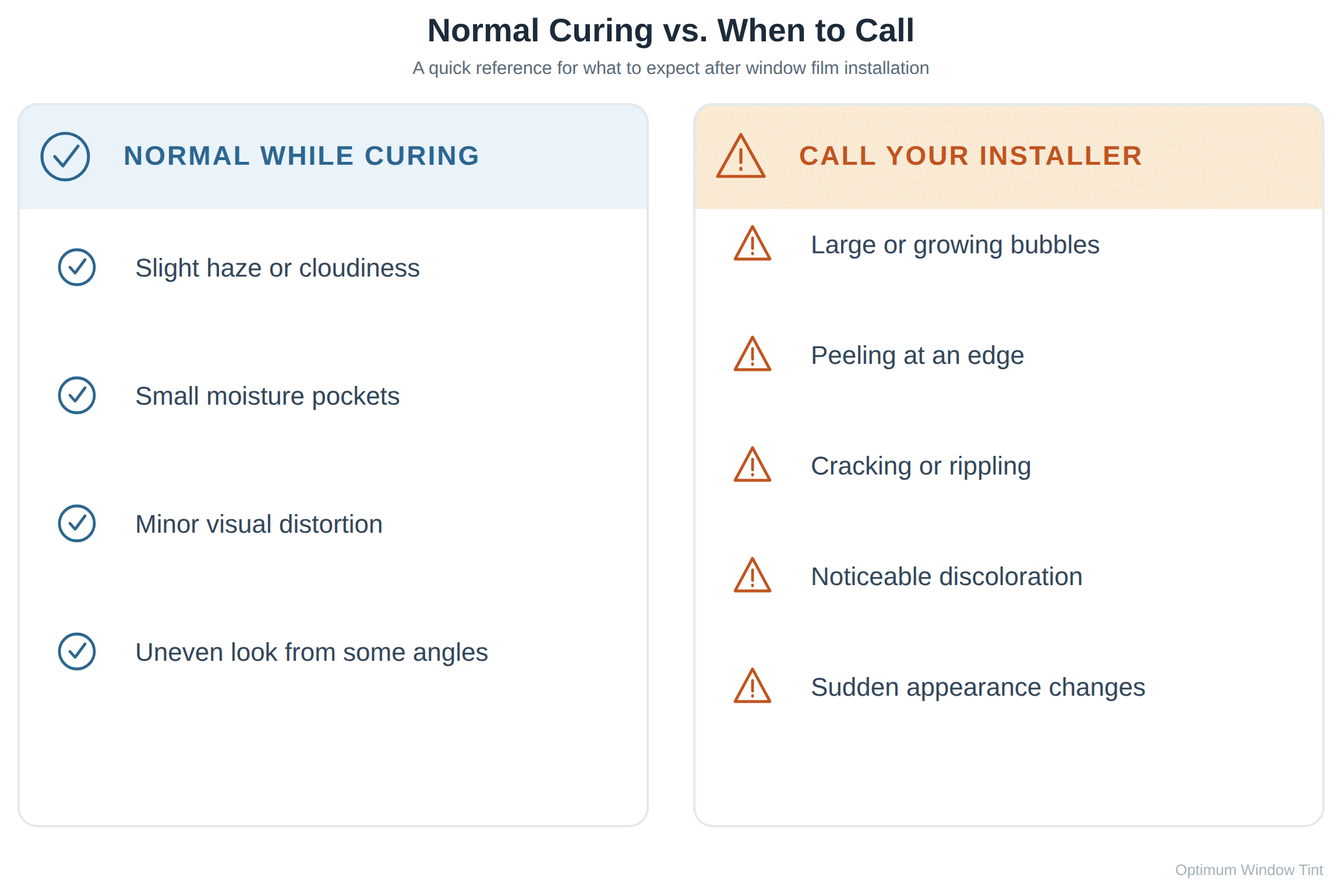
Film is installed with a liquid mounting solution, and a small amount can stay trapped between the film and glass while the adhesive cures. During that period, it's normal to see haziness, small moisture pockets, minor distortion, or an uneven look from certain angles. This should improve steadily as the remaining moisture evaporates and the film bonds to the glass.
Curing time depends heavily on the product and the conditions it was installed in. Some films clear up within days, while thicker safety and security films, or installations in cool, shaded, or humid spaces, can take 30 days or more. 3M recommends waiting at least 90 days before reporting certain appearance concerns on some of its products, though that timeline applies specifically to those films rather than as a universal rule. Ask your installer what curing period to expect for yours.
When Bubbling Needs a Call
A small moisture pocket early on is usually just part of curing and often shrinks on its own. Contact your installer if you notice:
- Bubbles that are large, numerous, or still growing
- Bubbles that haven't improved after the expected curing period
- Bubbling that appears months or years after installation
- Dirt, fibers, or other debris trapped under the film
- Visible distortion in your view through the window
- Bubbling paired with peeling, cracking, or discoloration
Don't puncture a bubble or try to press it out with a hard tool. That can damage the film and affect your warranty coverage. Photograph it instead and send the photo to your installer, along with the installation date and how much direct sun that window gets.
When Peeling Is a Problem
Film shouldn't lift away from the glass on its own. Peeling that starts at a corner, an edge, near a latch, or around a scratched spot can point to contamination, adhesive failure, or physical damage that needs a look. Madico lists peeling, bubbling, rippling, cracking, delamination, and demetallization among the defects some residential warranties cover, though actual coverage depends on the product, the installation, and the specific warranty terms. Contact your installer as soon as an edge starts to lift, and don't pull, trim, glue, tape, or press it back into place unless you're told to. A small affected area is usually easier to evaluate and repair before it spreads or collects dust underneath.
Other Signs Worth an Inspection
- Cracking: may signal physical damage or product deterioration, especially in safety and security film.
- Discoloration: a noticeable purple, yellow, or bronze tint can mean the film is breaking down.
- Rippling or delamination: a wavy, layered look often points to adhesive failure or separation between layers.
- Scratches or gouges: usually caused by knives, jewelry, or abrasive pads, and mechanical damage isn't always covered by warranty.
- Any sudden change in film that has looked normal for months or years.
Photograph the affected area before cleaning or touching it, so your installer can see its original condition and compare.
Call Your Installer First
Manufacturer websites are useful for general information, but your installer knows the exact film that was used, how it was installed, what glass it went on, and which warranty applies. When you reach out, share your name and installation address, the approximate installation date, which room or window is affected, photos taken from a few angles, a description of when the issue appeared, and any recent cleaning, construction, or window-related activity nearby. Keep your invoice, product information, and warranty documents somewhere safe. Many manufacturer warranties apply only to the original purchaser and may require proof of professional installation.
The Bottom Line
Window film care isn't complicated. Follow your installer's specific instructions, give the film the appropriate amount of time to cure, avoid abrasive tools, and call if something doesn't look right. It's always better to ask about a possible problem than to attempt a DIY fix that could permanently damage the film.
Optimum Window Tint installs residential and commercial window film throughout Utah. If you have questions about caring for film we installed, or you need an existing installation inspected, contact our team for professional guidance.
Contact Us