
Why Is My Room Still Hot When the Blinds Are Closed?

Closing the blinds should make a sunny room feel cooler. The light disappears, the glare softens, and the room looks shaded. Yet many homeowners discover that the temperature barely changes.The couch still feels warm. The air conditioner keeps running. The room becomes uncomfortable every afternoon, even though the blinds have been closed for hours.
The problem is not that blinds do nothing. Blinds can reduce direct sunlight and help control glare. The problem is that most blinds sit on the interior side of the window. By the time sunlight reaches them, a significant amount of solar energy has already passed through the glass and entered the home. That difference explains why a room can remain hot even when the blinds are completely closed.
Understanding how heat moves through windows can help you decide whether you need better blinds, insulated shades, exterior shading, solar window film, or a combination of solutions.
Why Windows Make Certain Rooms So Hot
Windows allow daylight and outdoor views into a home, but they can also admit solar heat.
The National Fenestration Rating Council uses a measurement called Solar Heat Gain Coefficient, or SHGC, to describe how much solar heat a window allows inside. A lower SHGC means the window blocks more solar heat. A higher SHGC means more solar heat passes through the window. This measurement is different from visible light.
A window can allow plenty of daylight while still being designed to reject a meaningful amount of solar heat. Likewise, making a room visually darker does not automatically mean the window is controlling heat effectively. Rooms with large windows often feel hottest when they face west or southwest. West-facing glass receives strong afternoon sunlight at the same time outdoor temperatures are approaching their daily peak. ENERGY STAR specifically identifies west-facing windows as a concern because the low afternoon sun can pass beneath roof overhangs and contribute to overheating during the hottest portion of the day.
That pattern is common in Utah homes. A living room may feel comfortable in the morning and become noticeably hotter between late afternoon and sunset.
Why Closed Blinds Do Not Always Stop the Heat
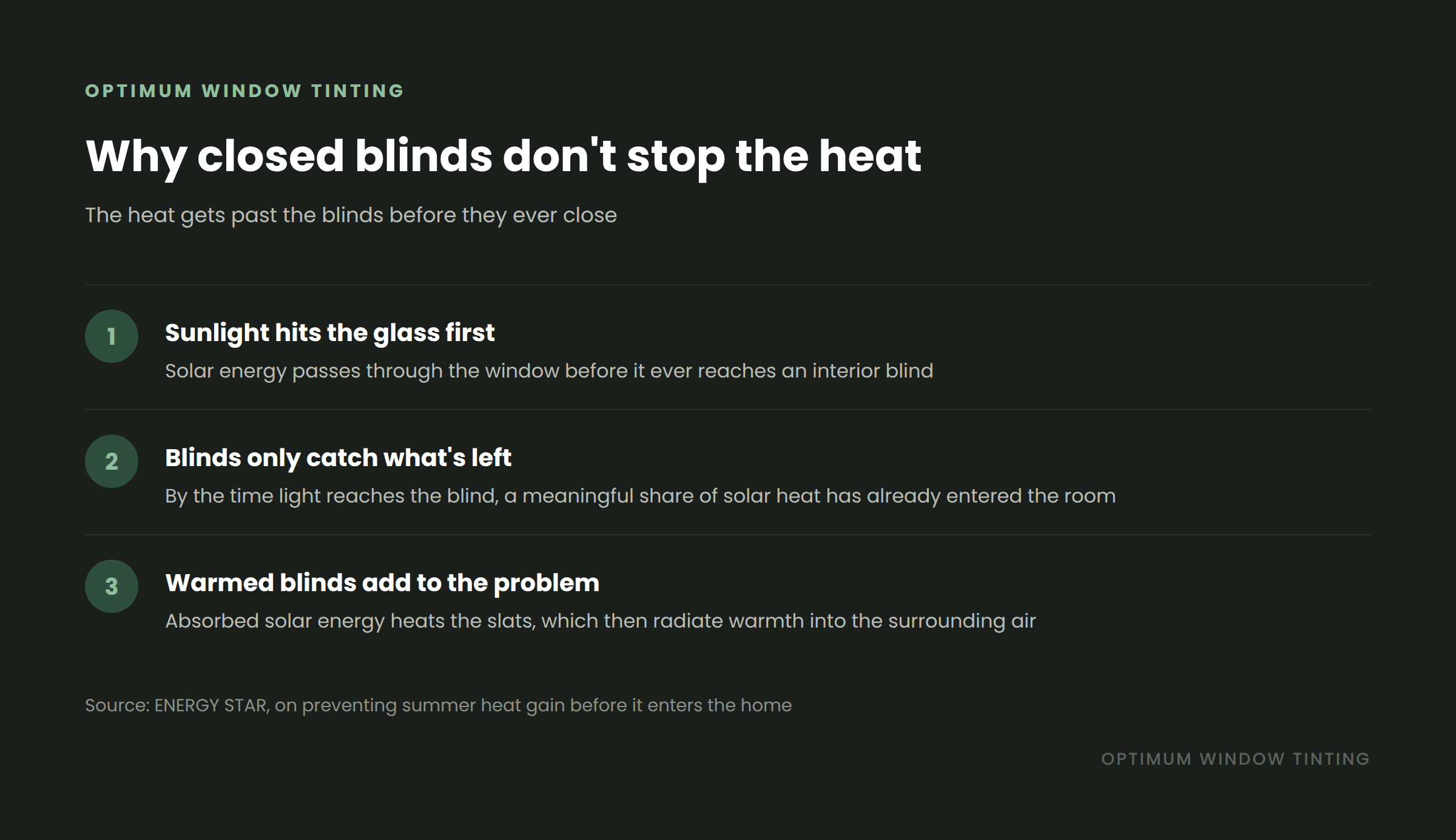
Traditional blinds are installed after the glass, meaning they sit inside the home. Sunlight first reaches the exterior surface of the window. It then passes through the glazing before striking the blinds.
Some of that energy may be reflected toward the window. Some is absorbed by the blind slats. Once the blinds warm up, some of that absorbed energy can be transferred to the surrounding indoor air and nearby surfaces. This is why blinds can feel hot to the touch on a sunny afternoon.
They are blocking the visible beam of sunlight from reaching the rest of the room, but they may also be absorbing solar energy that has already entered through the window. ENERGY STAR notes that interior curtains and drapes can help reduce heat gain, but it is generally more effective to prevent summer heat from getting past the glass and entering the building in the first place.
Blinds still provide plenty of value. They can:
- Reduce glare
- Improve privacy
- Control daylight
- Limit direct sunlight on furniture and flooring
- Improve the appearance of a room
Their effectiveness for heat control depends on the material, color, reflectivity, fit, slat position, and how completely they cover the window.
Light Control and Heat Control Are Not the Same Thing
One of the biggest misconceptions about windows is that a darker room must automatically be a cooler room. Visible light is only one part of the solar energy reaching a window. Solar heat also includes infrared energy that people experience as warmth. A blind can eliminate the bright patch of sunlight crossing the floor while the glass, blinds, and air between them remain warm. Window performance is therefore measured in several different ways.
Visible Transmittance describes how much visible daylight passes through a window.
Solar Heat Gain Coefficient describes how much solar heat the window admits.

NFRC treats these as separate performance measurements because daylight and solar heat are related, but they are not the same thing. That distinction also explains why modern solar control window film does not necessarily need to be extremely dark. Certain spectrally selective products are designed to manage infrared and other portions of solar energy while maintaining relatively high visible light transmission. The goal is to reduce unwanted heat without unnecessarily eliminating the natural light and outdoor view.
Which Blinds Work Best for Reducing Heat?
Not every blind performs the same way.
Light-colored or reflective blinds generally manage summer sunlight better than dark, highly absorbent materials. A reflective surface can direct more solar energy back toward the window, while darker materials are more likely to absorb that energy and become warm. The position of the slats also matters.
Tilting horizontal blinds upward can redirect daylight toward the ceiling while limiting direct exposure to floors, furniture, and people. Closing the blinds more tightly provides additional shading, but it also removes the view and much of the natural light. Fit is another important factor.
Blinds with large gaps around their edges allow sunlight to pass around the covering. Treatments that sit closer to the glass and cover the entire window opening typically provide better control than undersized or loosely fitted blinds.
Homeowners looking for more insulation may consider cellular shades. Their honeycomb construction creates enclosed air pockets between the room and the glass.
The Department of Energy helped establish the Attachments Energy Rating Council so homeowners can compare the energy performance of blinds, shades, and other window attachments using standardized measurements rather than relying only on promotional claims.
Even a high-performing shade generally needs to be closed to provide its full benefit.
That tradeoff matters in living rooms, kitchens, home offices, and view-oriented spaces where homeowners want natural light throughout the day.
What About Blackout Curtains?
Blackout curtains can be useful for bedrooms, nurseries, home theaters, and other rooms where darkness is the primary goal.
Heavier curtains may also reduce heat transfer and limit the amount of direct sunlight reaching the occupied portion of the room. ENERGY STAR recommends closing shades and drapes during warm weather to help keep out summer heat. However, blackout curtains do not make solar energy disappear.
Like most blinds, they are installed inside the home. They may reflect some energy toward the glass and absorb some within the fabric.
That may be acceptable for a bedroom during the day, but it is often less desirable in a living room, kitchen, or home office. Blackout curtain reduce heat transfer significantly be require to be closed during peak day hours to be effective. Unless you plan to have a pitch black home during the day, this is not always the most realistic choice.
The right choice depends on the problem you need to solve.
If you want darkness and nighttime privacy, blackout curtains may be an excellent option. If you want to preserve daylight and the outdoor view while reducing solar heat, another solution may make more sense.
How Window Film Addresses Heat Differently
Solar control window film is applied directly to the glass.
Instead of waiting for sunlight to reach an interior blind, the film changes how the glazing system handles solar energy. Depending on the product, window film can reflect, absorb, or selectively reject portions of the solar spectrum. This can reduce the amount of solar heat continuing into the room while still allowing visible light through.
The result is different from simply closing a blind.
A properly selected film can provide solar control throughout the day without requiring homeowners to cover their windows. The room can remain bright, the outdoor view can remain visible, and the glazing system can provide better heat and glare management. The Department of Energy explains that spectrally selective coatings can filter a substantial portion of the heat normally transmitted through insulated glass while continuing to admit daylight.
Window film appearance varies.
Some products are reflective or noticeably tinted. Others are designed to remain neutral or nearly clear. Manufacturers offer films with high visible light transmission, low reflectivity, and meaningful solar heat rejection for homeowners who want performance without a dark appearance. Performance also varies significantly between products.
Homeowners should not assume that every clear, privacy, decorative, or reflective film provides the same level of heat rejection. Film selection should consider:
- Existing glass type
- Window orientation
- Room conditions
- Desired appearance
- Privacy requirements
- Glare concerns
- Manufacturer performance data
The film should also be compatible with the existing glazing system.
.png)
Can Window Film and Blinds Be Used Together?
Yes.
For many homes, the most complete solution is not blinds or window film. It is window film and blinds. Window film can provide continuous solar control while the blinds remain open. The blinds can then be used when adjustable privacy, room darkening, or additional glare control is needed.
This allows each product to handle the job it performs best:
- Window film manages solar heat, UV exposure, and daytime glare at the glass.
- Blinds provide adjustable daylight and privacy.
- Curtains add design, nighttime privacy, and potentially more insulation.
Window film can be used alongside blinds, shades, curtains, and other existing window treatments. Its primary advantage is that it can provide solar control without requiring the view to remain obstructed. This combination is especially useful when a room has several competing needs. A home office may need daylight during working hours, glare control for computer screens, and privacy in the evening. A living room may need afternoon heat reduction while still using curtains for design and nighttime privacy.
Adding film does not normally mean you have to remove the blinds or curtains you already use.
Other Reasons a Room May Stay Hot
Windows are often a major source of afternoon heat, but they are not the only possible cause.
A room may also feel hot because of:
- Inadequate insulation
- Air leaks
- Poor return airflow
- Closed or blocked vents
- Duct problems
- An undersized cooling system
- Vaulted ceilings
- Heat from appliances or electronics
Timing can provide a useful clue. If the room becomes hottest when direct sunlight reaches the windows and begins cooling after sunset, solar heat gain is likely contributing to the problem. If the room remains uncomfortable throughout the day and night, the cause may involve airflow, insulation, ductwork, or the HVAC system.
You can also compare the surfaces within the room. Stand near the window during the hottest part of the day. Notice whether the glass, blinds, floor, couch, or nearby wall feels warmer than similar surfaces elsewhere in the house.
A professional window film consultation do not assume film is the answer to every comfort problem. The goal is to determine whether the windows are contributing enough heat that improved solar control would make a meaningful difference.
Which Windows Should You Address First?
You may not need to tint every window in your home.
Start with the rooms experiencing the most noticeable heat, glare, or fading.
West-facing and southwest-facing windows are often the highest priority because they receive intense late-day exposure. Large south-facing windows and skylights can also contribute significant solar heat depending on their design, season, roof overhangs, and surrounding shade.
Prioritize windows located near:
- Frequently used seating areas
- Home offices and television screens
- Hardwood flooring and area rugs
- Upholstered furniture
- Artwork and photographs
- Rooms with persistent afternoon heat
A targeted installation can address the worst areas first while allowing you to evaluate the improvement before expanding the project to other parts of the home.
Are Blinds Enough for Your Home?
Blinds may be enough when the heat problem is mild, the room can remain dark during the hottest hours, and adjustable privacy is more important than preserving the outdoor view. They may not be enough when the blinds stay closed all afternoon but the room still overheats, the air conditioner struggles to keep up, or you are tired of sacrificing daylight to remain comfortable.
The right solution could involve:
- Reflective blinds
- Cellular shades
- Blackout curtains
- Exterior shading
- More efficient windows
- Solar control window film
- A combination of multiple products
What matters is matching the solution to the actual problem. Blinds primarily control what happens after sunlight reaches the interior side of the glass. Window film changes the way solar energy is managed at the glass itself. That is why the products can create different results even when they make a room appear equally shaded.
Reduce Heat Without Giving Up Your Windows
You should not have to choose between enjoying your windows and keeping your home comfortable. If your blinds are closed but the room still feels hot, the glass may be allowing more solar heat inside than the blinds can effectively manage.
Optimum Window Tint can evaluate your window orientation, glass type, room conditions, and preferred appearance before recommending a residential window film. Modern window film options can reduce heat and glare while preserving natural light and outdoor views. They can also work alongside the blinds and curtains you already use.
Contact Optimum Window Tint for a residential window film consultation in Utah and find out whether your windows are contributing to the uncomfortable heat in your home.