
Lower Your AC Bills This Summer with Window Tint: Why Many Homes See Payback in 3 Years or Less

If your air conditioner feels like it's running nonstop from June through September and your power bill keeps climbing anyway, your windows are probably part of the problem. Untreated glass lets a huge amount of solar heat pour straight into your home, and your HVAC system spends its whole summer trying to fight it off.
Here's where that heat is coming from, which windows are costing you the most, and why the U.S. Department of Energy considers window film one of the fastest-paying-back home upgrades available.
Why Your Air Conditioner Is Working Overtime This Summer
Every summer afternoon, your windows let in a flood of solar energy that your air conditioner then has to remove. That's the hidden cost of solar heat gain: it's not listed as a separate line item on your power bill, but it's baked into every kilowatt-hour your AC uses to keep up.
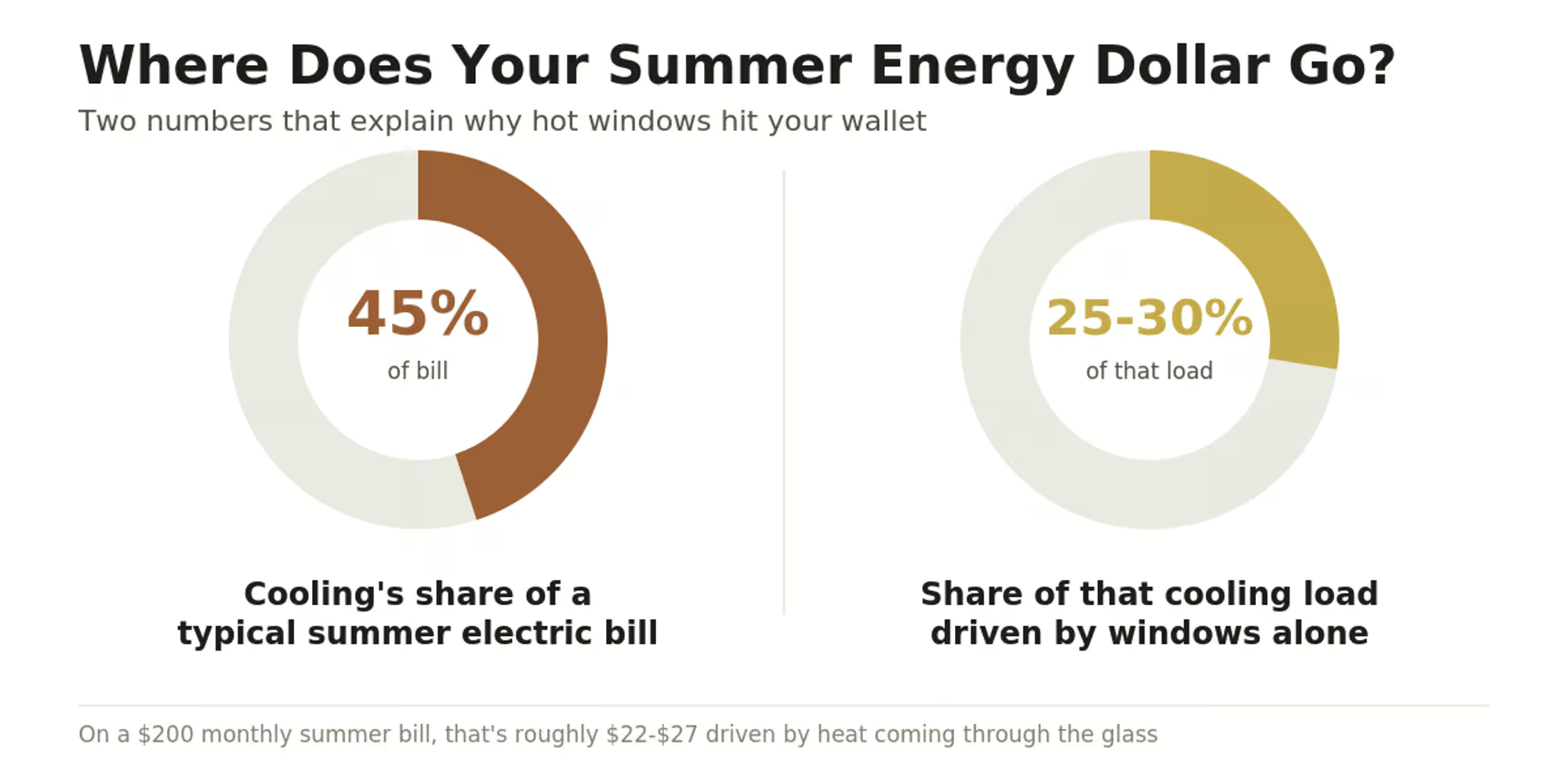
Here's why windows are so often the biggest culprit:
- Cooling makes up roughly 45% of a typical summer electric bill
- Windows are responsible for an estimated 25% to 30% of a home's total heating and cooling energy use
- On a $200 monthly summer bill, that puts roughly $22 to $27 a month squarely on the shoulders of your glass
- Unlike walls or roofs, windows offer almost no resistance to incoming solar radiation, so they convert sunlight into indoor heat all day long
Your HVAC system isn't inefficient, it's just being asked to do extra work because your windows are quietly adding heat to the room faster than the system can remove it. Address the windows, and the system doesn't have to work as hard.
The Windows Quietly Driving Up Your Cooling Bill
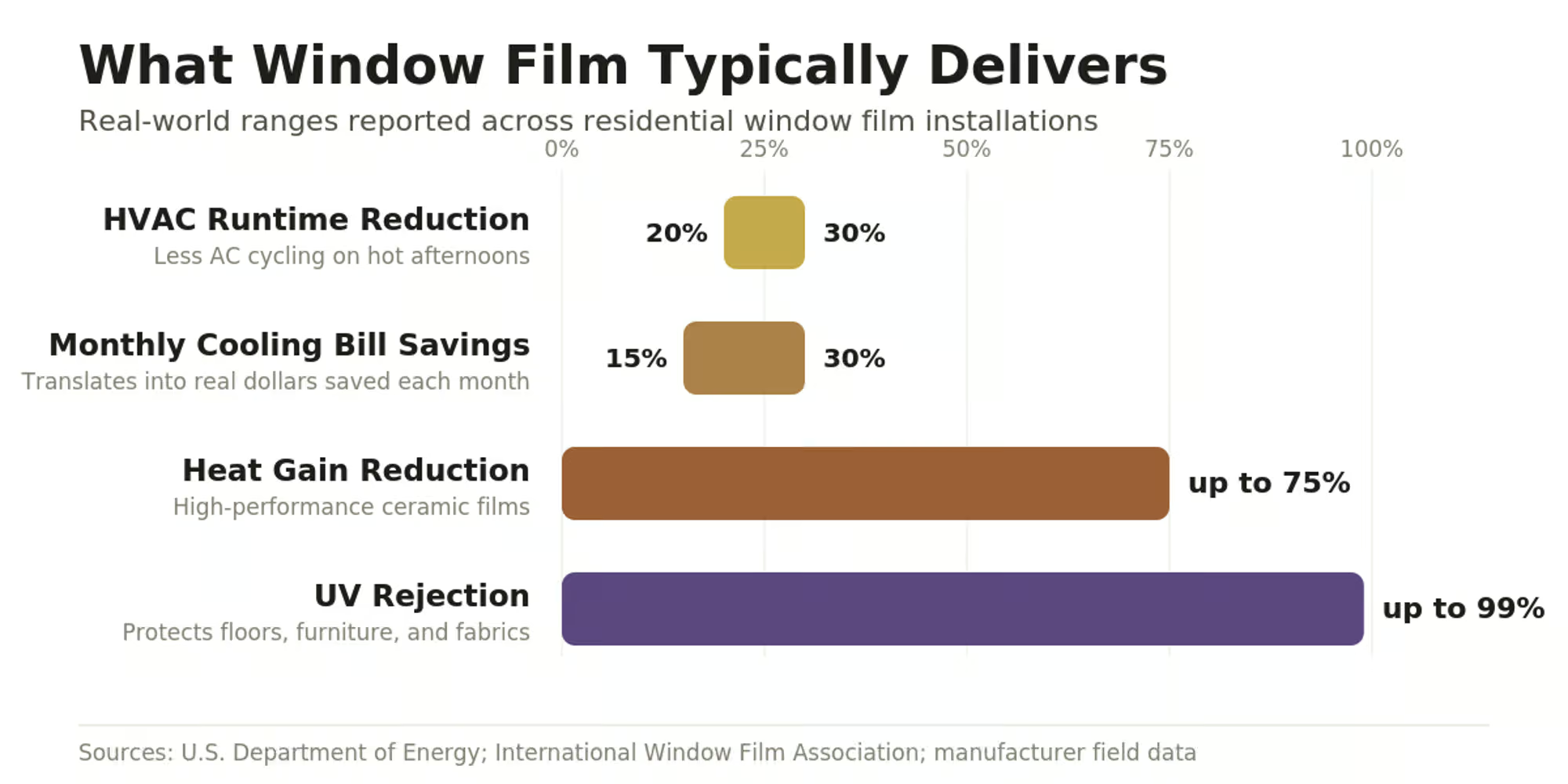
Not all windows contribute equally to your cooling costs. Orientation and size both play a major role, and for most Utah homes, a handful of windows are doing most of the damage.
South-Facing Windows
South-facing windows are exposed to the sun for the longest stretch of the day. They don't necessarily hit the hardest at any one moment, but because they're collecting solar energy almost continuously from morning through evening, they add up to a steady, all-day contribution to your cooling load. In homes with a lot of south-facing glass, this becomes one of the largest cumulative sources of heat gain over a full day.
West-Facing Windows
West-facing windows take the brunt of the hottest part of the day, typically from early afternoon into evening. This is also when your AC is already working its hardest just to keep up with outdoor temperatures, so any extra heat coming through west-facing glass lands at the worst possible time. Homes with large west-facing windows often report the most dramatic "this room is unusable in the afternoon" complaints, and these windows are frequently the single biggest driver of late-day cooling spikes.
Large Picture Windows and Sliding Glass Doors
Size matters as much as orientation. A small window facing west does some damage, but a wall of glass facing west does considerably more, simply because there's more surface area for solar energy to pass through. Large picture windows and sliding glass doors are especially common culprits because:
- They're often installed in living rooms and great rooms, the spaces families use most
- They tend to face the backyard, which is frequently south- or west-facing for views and outdoor living
- Their sheer size means even a moderate amount of heat gain per square foot adds up to a large total
If you have a sliding door or floor-to-ceiling window combination on the south or west side of your home, there's a good chance it's one of the top contributors to your summer cooling bill.
How Window Film Cuts Your Cooling Costs
Window film works by addressing the problem at its source: the glass itself, before solar heat ever has a chance to become a load on your HVAC system.
Blocking solar heat before it enters. Rather than letting solar energy pass through the glass and then trying to cool it back out of the room, window film reflects and absorbs a significant portion of that energy at the window. Less heat gets in, so there's less heat for your AC to remove in the first place.
Reducing HVAC runtime. When less heat is entering through the glass, your air conditioner doesn't need to run as long or as often to hold the same indoor temperature. Less runtime means lower energy consumption, and it also means less wear on the compressor and other components over time.
Creating more consistent indoor temperatures. Without film, a home can have wildly different temperatures from room to room depending on sun exposure, forcing the HVAC system to overcool some areas just to keep the hot rooms tolerable. By reducing the heat gain in the worst-offending rooms, window film helps even out the temperature throughout the house, so your system isn't fighting an uphill battle in one room while overcooling another.
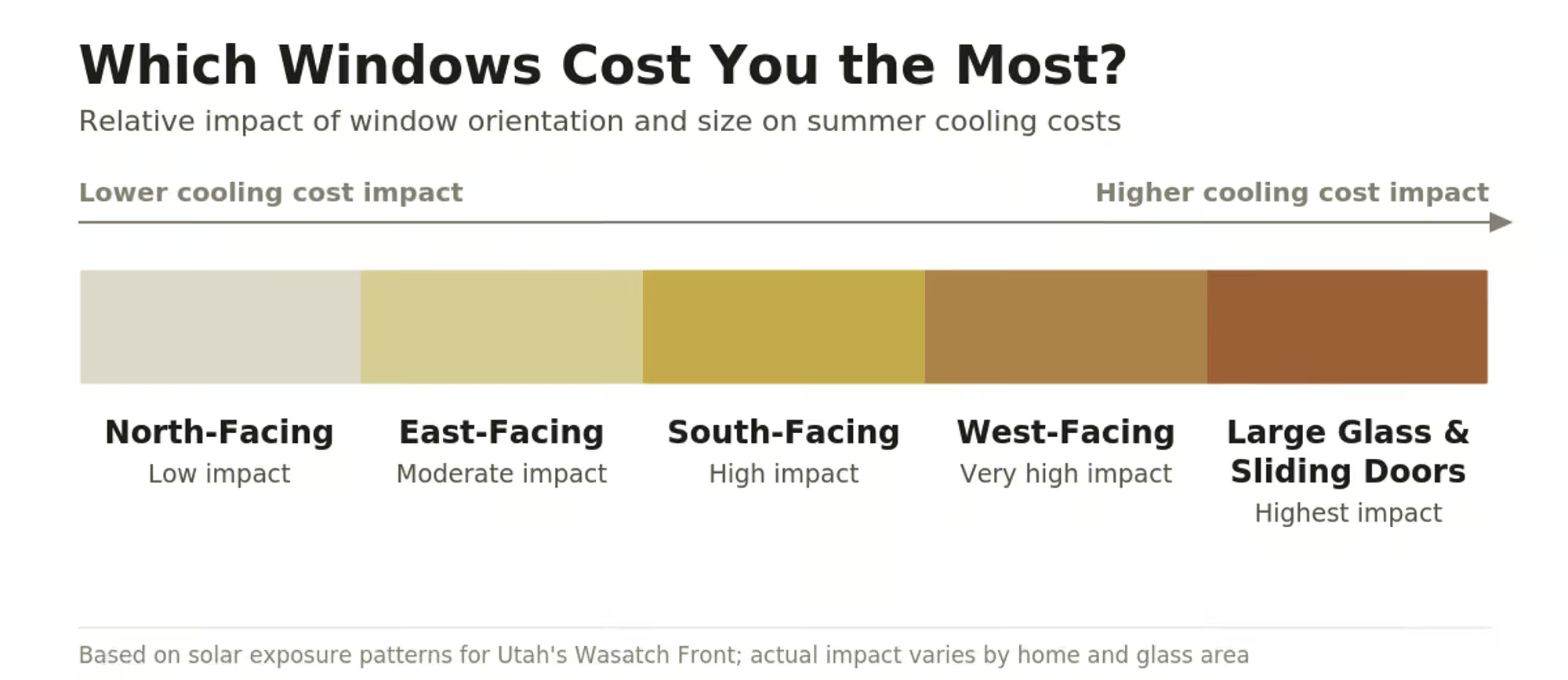
A look at the numbers from industry studies and field data shows a consistent pattern:
- HVAC runtime reductions of 20% to 30% during peak cooling season
- Monthly cooling bill savings of 15% to 30% on average
- Heat gain reductions of up to 75% with high-performance ceramic and spectrally selective films
- UV rejection of up to 99%, which protects interiors as a bonus on top of the energy savings
A few factors affect where your home lands within these ranges:
- Glass area and orientation – more south- and west-facing glass means more potential savings
- Current window type – older single-pane or basic double-pane windows have more room for improvement than newer Low-E glass
- HVAC system condition – an aging or oversized system may see proportionally larger runtime reductions
- Film quality – ceramic and spectrally selective films consistently outperform older dyed films in these ranges
The Payback Math: How Fast Does Window Tint Pay for Itself?
This is where window film stands out compared to almost any other home energy upgrade. The U.S. Department of Energy has identified window film as a first-tier energy conservation technology, citing paybacks as fast as three years, one of the quickest of any retrofit measure studied.
Here's a simplified way to think about the math. Say a home has a meaningful amount of south- and west-facing glass, a combination of large windows and a sliding door. Professional ceramic film installation typically runs in the $5 to $8 per square foot range for residential projects. Once installed, that glass should see a 15% to 30% reduction in the cooling costs it was driving, every month, for as long as the film lasts (often 10 to 15+ years with quality products).
A few reasons south- and west-facing windows provide the fastest return:
- They're responsible for the largest share of solar heat gain, so there's more cost to cut
- Savings are concentrated during the months electricity rates and AC usage are both at their highest
- The same investment on a north-facing window, where heat gain was already low, simply has less to work with
Putting it together, most homeowners with meaningful south- or west-facing glass exposure land somewhere in the 2 to 5 year payback range, with homes that have the most glass and the oldest, least efficient windows trending toward the faster end. And unlike a full window replacement, which can take 15 to 25 years to pay back, or an HVAC system replacement, which typically runs 10 to 15 years, window film delivers comparable comfort and efficiency improvements at a fraction of the cost and disruption.
More Than a Lower Bill: The Other Payoffs
Energy savings get most of the attention, but they're really just one part of the value window film delivers.
UV protection. Quality window film blocks up to 99% of UV radiation, the wavelength responsible for the majority of fading damage to floors, furniture, and fabrics. This protection runs continuously, all year, regardless of whether your AC is even on.
Reduced glare. Bright afternoon sun bouncing off screens, countertops, and hardwood floors makes rooms hard to use for reading, working, or watching TV. Film cuts that glare significantly without making the room feel dark or closed off.
Increased comfort. This is the benefit homeowners notice first. Hot spots near windows disappear, the temperature difference between rooms shrinks, and spaces that used to be avoided in the afternoon become usable again.
Furniture and flooring protection. UV and heat damage to interiors is cumulative and permanent. Hardwood floors bleach, upholstery fades, and artwork degrades, often without anyone noticing until the damage is significant. Film slows this process dramatically, protecting investments you've already made in your home's interior.
Clear Film vs. Dark Film for Energy Savings
A common assumption is that darker film equals better performance. That's not how it works, and it's an important distinction when you're trying to maximize savings without changing how your home looks.
Why darkness doesn't equal performance. A film's visible darkness, measured as Visible Light Transmission (VLT), tells you how much light gets through. It doesn't tell you how much heat gets blocked. A film can be quite dark and still do a mediocre job rejecting infrared and UV energy, while a much lighter film engineered differently can outperform it on total heat rejection.
Modern high-performance film options. Ceramic and spectrally selective films use advanced coatings to target the infrared and UV wavelengths responsible for heat and damage, while allowing most visible light through. The result is a film that can deliver strong energy savings, often in that 50% to 75% heat gain reduction range, while looking nearly clear on the glass. For homeowners who don't want their windows to look noticeably tinted, this is the technology that makes strong savings and an unchanged appearance both possible at the same time.
The Best Candidates for Window Tint in Utah
Window film delivers value in almost any home, but some homes see a faster and more dramatic return than others.
Homes with large glass exposure. More glass means more potential heat gain, and more potential savings. Homes with great rooms, large picture windows, multiple sliding doors, or floor-to-ceiling glass walls have the most to gain, both in dollars saved and in comfort improvement.
Older homes. Homes with single-pane or basic double-pane windows, common in older Utah neighborhoods, were built before solar heat gain was a major design consideration. These windows let in significantly more heat than modern Low-E glass, which means film has a larger gap to close and a bigger impact to make.
Rooms that are always hot. If there's a room in your house that everyone avoids by 3 p.m. in July, that's not a quirk, it's a clear signal. Rooms with persistent heat problems are almost always tied to specific windows with poor orientation, large glass area, or both, and they're often the single best place to start.
Should You Tint Every Window?
Not necessarily, and that's actually good news for your budget.
Whole-home approach vs. targeted installation. A whole-home installation delivers the most comprehensive comfort and UV protection benefits, and it's the right call for homes with extensive glass exposure throughout. But for many homes, a targeted approach focused on the windows doing the most damage delivers the majority of the financial benefit at a fraction of the cost.
Prioritizing south and west exposures. Because south- and west-facing windows are responsible for the largest share of solar heat gain, they should be first in line for any window film project. North-facing windows, by comparison, receive very little direct sun and typically aren't a priority for energy savings, though some homeowners still choose to treat them for UV protection and glare reduction.
A practical approach for most homes: start with south- and west-facing windows, large picture windows, and sliding glass doors, then evaluate whether remaining windows justify additional investment based on comfort and interior protection goals.
Start Saving Before Peak Summer Heat Arrives
Why timing matters. Window film doesn't do any good sitting on a shelf, and installation takes time to schedule, especially as demand picks up heading into the hottest months. Getting film installed before peak summer heat arrives means you're capturing savings during the months your AC works hardest and your bills are highest, rather than waiting it out for another season.
What homeowners should evaluate before installation. A quick walk-through of your home can help identify where film will have the biggest impact:
- Which rooms feel uncomfortably hot by mid-afternoon
- Which windows face south or west, and how large they are
- Whether your current windows are single-pane, double-pane, or Low-E
- Where glare makes it hard to use a TV, computer, or workspace
- Which rooms have furniture, flooring, or rugs already showing signs of fading
Answering these questions gives you a clear, prioritized starting point, so your investment goes toward the windows that will save you the most, the fastest.
Ready to start saving on your cooling costs before the next heat wave hits? Contact Optimum Window Tint for a free consultation and find out how fast window film could pay for itself in your home.
Sources
- 3M. "Window Film Energy Savings for Your Building." https://www.3m.com/3M/en_US/building-window-solutions-us/solutions/energy/
- Window Film Depot. "Comparing ROI on New Windows vs. Window Film." https://www.windowfilmdepot.com/blog/roi-window-film/
- Window Film Depot. "Payback Studies." https://www.windowfilmdepot.com/services/payback-studies/
- Solargard / International Window Film Association. "Energy Analysis for Window Film Applications in New and Existing Buildings." https://www.solargard.com/wp-content/uploads/2016/02/consol-report-iwfa-energy-study.pdf
- CoolVu. "Window Coverings That Help With Energy Efficiency." https://www.coolvu.com/blog/window-coverings-that-help-with-energy-efficiency/
- EcoArc Films. "Discover the Best Window Film for Home Energy Savings." https://www.ecoarcfilms.com/best-window-films-for-energy-savings
- EcoArc Films. "Energy-Saving Window Films: Your Savings Calculation Guide." https://www.ecoarcfilms.com/energy-saving-window-films-measuring-cost-benefits
- Rocky Mountain Power. "High Bill Help." https://www.rockymountainpower.net/my-account/billing-options/high-bill-help.html
- ElectricChoice. "Utah Electricity Prices & Costs (2026)." https://www.electricchoice.com/electricity-prices-by-state/utah/
- EnergySage. "Compare Utah Electricity Rates (2026)." https://www.energysage.com/local-data/electricity-cost/ut/
- Bob Vila. "How Much Does Window Tinting Cost?" https://www.bobvila.com/articles/how-much-does-window-tinting-cost/
- Concord Window Film. "How Much Does Window Film Cost? A Homeowner's Guide." https://windowfilm.com/window-film-cost/
- Madico, Inc. "Essential Window Film Terminology Explained." https://madico.com/blog/residential/the-terminology-to-know-when-considering-window-film
- CoolVu. "Why Is Your Furniture Fading? UV Damage Nobody Talks About." https://www.coolvu.com/blog/furniture-fading-uv-damage-windows/
- Window Film Depot. "House Windows with UV Protection: Why Standard Windows Fall Short." https://www.windowfilmdepot.com/blog/house-windows-with-uv-protection/