
Why Are You Burning Up Next to Your Window This Summer? Understanding Solar Heat Gain and TSER

If you've ever sat near a window on a sunny Utah afternoon and felt like you were sitting under a heat lamp, you weren't imagining it. Your air conditioner might be running, your thermostat might say 72 degrees, and yet the spot two feet from the glass feels noticeably warmer. That's not a mystery, it's physics, and it's exactly what window film is designed to address.
Here's how solar heat actually gets into your home, what TSER means and why it matters more than how dark your tint looks, and how to choose the right film for Utah's intense summer sun.
Why Does It Feel So Much Hotter Near Your Windows?
The short answer is that your windows are acting like a solar collector. Glass is largely transparent to short-wave radiation from the sun. That energy passes through, strikes your floors, furniture, and walls, and converts into longer-wave heat. The problem is that once it converts, that heat has a much harder time escaping back out through the glass than it did coming in. So it builds up right where it landed.
This is the same basic principle that turns a parked car into an oven on a summer day:
- Solar energy enters as short-wave radiation
- It gets absorbed by interior surfaces (floors, furniture, walls)
- It re-radiates as long-wave infrared heat
- Glass can't transmit that heat back outside, so it gets trapped
The bigger and less-treated your windows are, the more pronounced this effect becomes.
Not every room bakes the same way, and orientation is usually the reason why:
- South-facing rooms get long, steady sun exposure for most of the day
- West-facing rooms take the full brunt of the afternoon sun, the hottest part of the day across most of Utah
- East-facing rooms get morning sun, then cool off in the afternoon
- North-facing rooms see the least direct sun and stay the most comfortable
- Skylights and large picture windows make the problem worse simply because there's more surface area for solar energy to pour through
If your living room feels unbearable by 4 p.m. while your north-facing bedroom stays comfortable, orientation is almost certainly the culprit.
Sunlight Isn't Just Light: The Three Types of Solar Energy Heating Your Home
When sunlight hits your window, it's not one uniform thing. It's a mix of three different types of energy, and each one affects your home differently. Understanding this breakdown is the key to understanding why some window films work so much better than others, even when they look similar on the glass.

Infrared radiation is the heat you feel. It's the invisible part of the spectrum that warms your skin when you stand in direct sun, and it makes up roughly 53% of the sun's total energy reaching the earth's surface. Infrared passes through standard glass with almost no resistance, which makes it the single biggest driver of hot spots and uneven room temperatures in most homes.
Visible light is the light you see, and it carries heat too. Visible light accounts for about 44% of solar energy. Most people assume only "invisible" rays cause heat, but when visible light hits a dark surface inside your home, like a hardwood floor or a dark countertop, it converts directly into heat. A film that only targets infrared and ignores visible light is missing a big piece of the puzzle.
Ultraviolet rays are the smallest slice, but the most destructive. UV makes up only about 3% of solar energy, yet it's responsible for an outsized share of the damage inside your home. A few things UV exposure does over time:
- Bleaches and fades hardwood floors
- Breaks down dyes in upholstery, rugs, and drapes
- Discolors artwork, photographs, and leather
UV exposure is linked to roughly 40% of all interior fading. Standard glass blocks very little of it, and even double-pane windows still let a meaningful amount of UV-A through, which is why sun-facing rooms slowly lose their color over the years, often without anyone noticing until the damage is significant.
Most residential windows, including modern double-pane units, were never really engineered to stop solar heat. They were built for weather protection, basic insulation, and daylight, which is exactly why they let solar energy through so efficiently. Low-emissivity (Low-E) glass improves on this with a metallic coating that reflects some infrared radiation, and it does make a real difference. But Low-E glass still allows a meaningful percentage of UV through, and its performance varies a lot depending on which surface the coating is applied to.
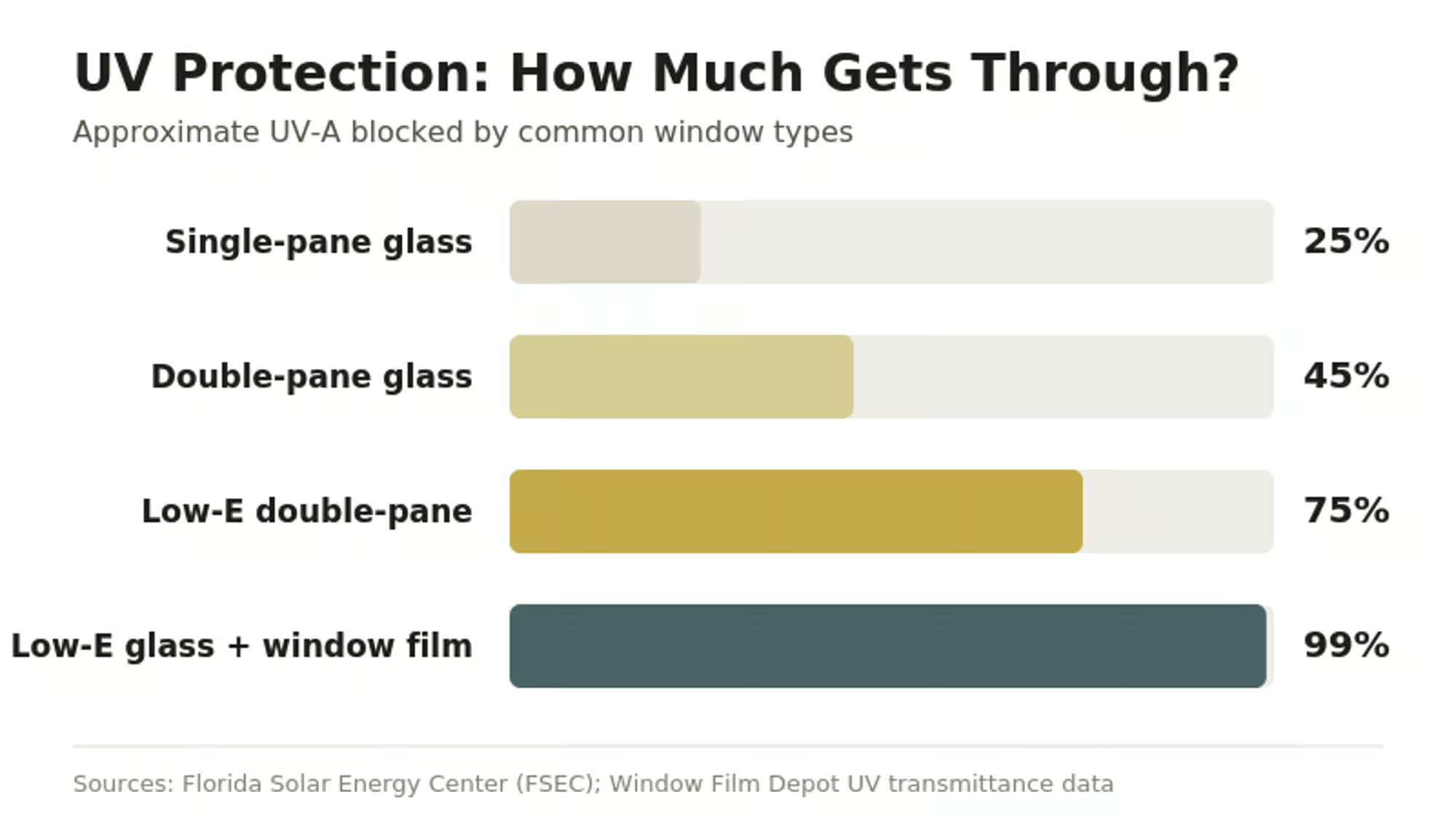
As the chart above shows, Low-E glass is a step in the right direction, but on its own it's not enough to handle Utah's high-altitude summer sun. Pairing it with window film closes most of the remaining gap.
TSER Explained: The Number That Actually Tells You How Much Heat a Film Blocks
If you're comparing window films, there's one number that matters more than any other: TSER, or Total Solar Energy Rejected.
TSER is the percentage of total solar energy, infrared, visible light, and UV combined, that a window film keeps out of your home. It's expressed as a percentage between 0 and 100, and the higher the number, the more heat the film is stopping before it ever becomes a problem inside your house.
There's also a simple relationship worth knowing: TSER is the inverse of Solar Heat Gain Coefficient (SHGC), a number you'll often see on window labels. If a window has an SHGC of 0.35, its TSER is 65%. The two numbers always add up to 1, so if you already know your window's SHGC, you can figure out its TSER in seconds.
Here's why this matters so much: a lot of people assume that darker tint automatically means better heat rejection. It doesn't. A film can look very dark, meaning it has a low Visible Light Transmission (VLT), while still doing a mediocre job of actually rejecting infrared and UV energy. Two films can look almost identical from the outside and perform very differently when it comes to keeping your home cool. TSER cuts through that confusion because it accounts for the entire solar spectrum, not just how much light gets through.
You may also come across Infrared Rejection (IRR) on a product spec sheet. It's a useful number, but it only tells you about one slice of the spectrum. TSER is the more complete and reliable figure when you're comparing overall performance between products.
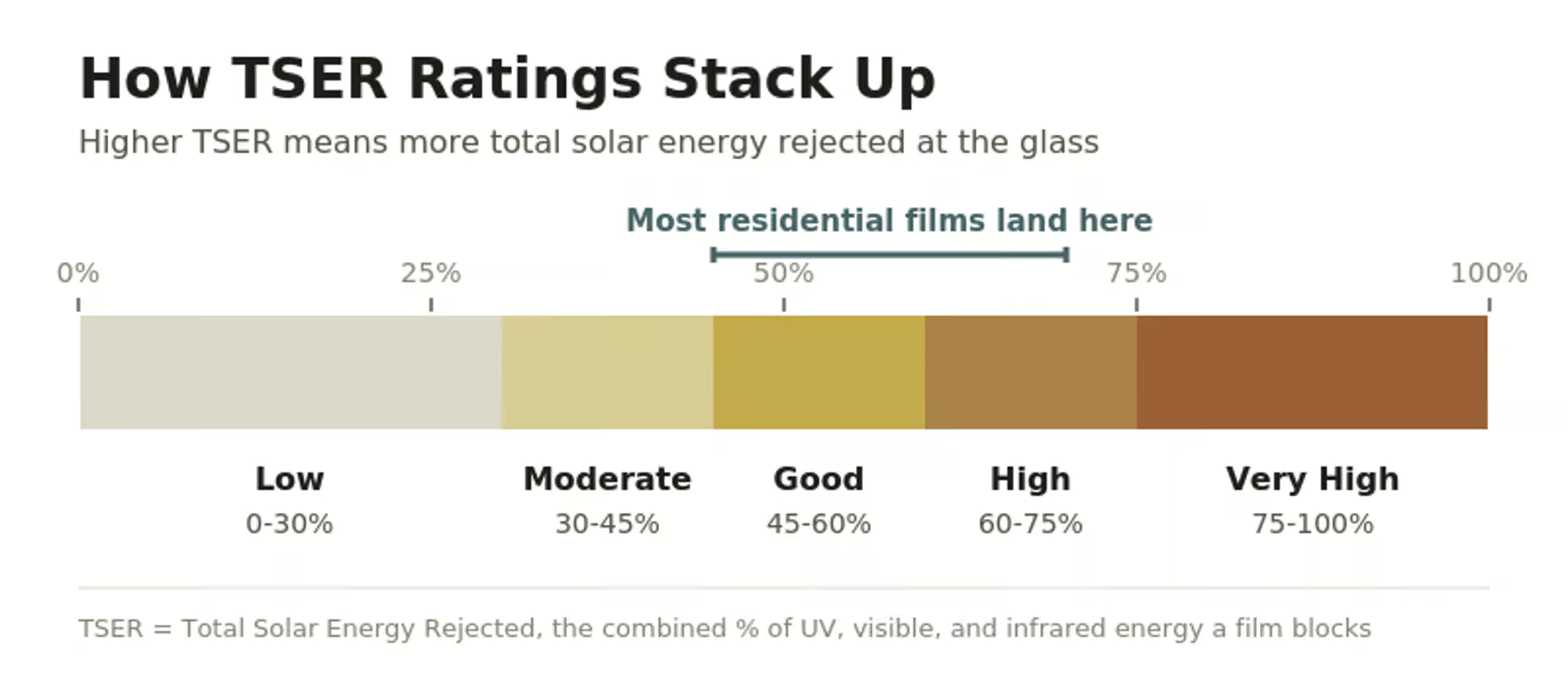
So what counts as a "good" TSER rating? Generally speaking:
- Below 30% – Low performance, minimal heat reduction
- 30-45% – Moderate, a light-duty improvement
- 45-60% – Good, solid everyday residential performance
- 60-75% – High, premium ceramic and spectrally selective territory
- 75%+ – Very high, often paired with heavier darkening
For most homes, films in the 45% to 70% range hit the sweet spot, offering a real reduction in heat without requiring a dramatic change in appearance.
Busting the Dark Tint Myth: Why Clear Film Can Outperform Black Glass
Here's the part that surprises most homeowners: some of the best-performing heat-rejection films on the market look almost completely clear.
Older dyed films relied on darkness to do their job, blocking light to reduce glare and heat at the same time. Modern ceramic films work differently:
- They use non-metallic ceramic particles embedded in the film to selectively absorb and reflect solar energy
- They specifically target the infrared wavelengths responsible for most of the heat
- Because they're not relying on tint to do the work, they let visible light through with minimal change to how the window looks
- They don't interfere with cell phone signals, GPS, or garage door openers the way older metallic films sometimes did
Spectrally selective films take this a step further, using multi-layer nanotechnology to filter different parts of the solar spectrum independently. The practical result is a film that can deliver 60% TSER or more while looking nearly invisible on the glass.
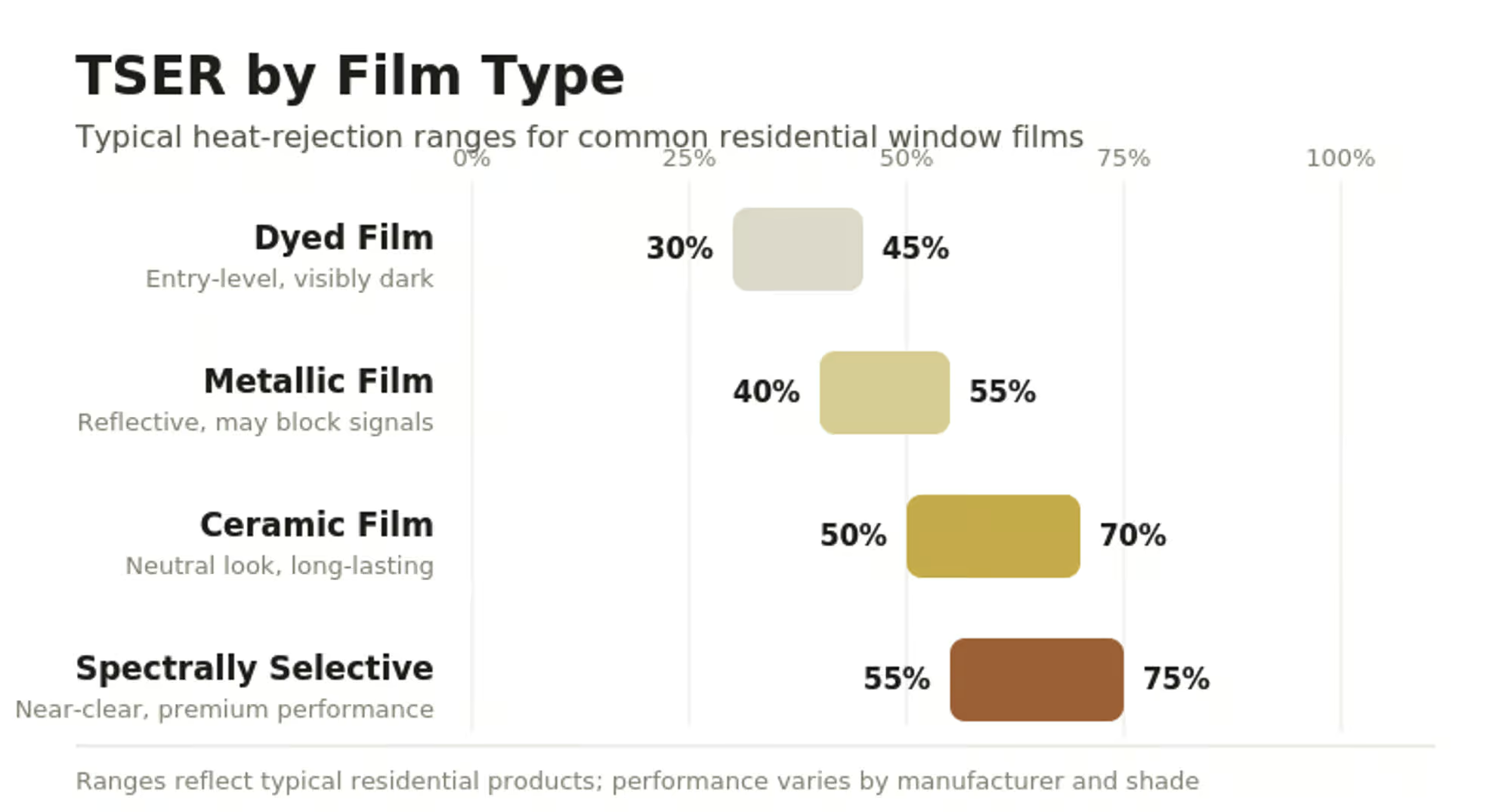
As the comparison above shows, ceramic and spectrally selective films consistently reject more total solar energy than older dyed or metallic options, often while looking lighter, not darker. For Utah homeowners with mountain views, open floor plans, or rooms built around natural light, this changes the equation entirely. You're no longer choosing between a comfortable home and a bright one.
What Actually Changes Once Window Film Goes On
The benefits of window film aren't theoretical, they show up in ways you can feel almost immediately.
Lower room temperatures. When solar heat is rejected at the glass instead of being allowed inside, the baseline temperature of a sun-exposed room drops, especially during peak afternoon hours. Rooms that used to be unbearable by mid-afternoon become usable again.
Fewer hot spots. A lot of the temperature imbalance you feel near a window comes from radiant heat coming directly off the glass itself. By reducing that radiant energy, window film evens out the temperature across a room, so the chair by the window stops being the seat nobody wants.
Less strain on your HVAC system. When less heat is entering through the glass, your air conditioner doesn't have to work as hard or run as often to maintain the same indoor temperature. A few of the downstream effects:
- HVAC runtime can drop by 20% to 30% during peak summer months
- Lower monthly cooling bills, especially across Utah's long, hot stretch from May through September
- Less wear and tear on aging HVAC equipment, which can extend its lifespan
Long-term protection for your interior. UV damage to flooring, furniture, and fabrics is cumulative and permanent. Once a rug fades or a hardwood floor bleaches out near a window, there's no reversing it. High-quality window film blocks up to 99% of UV radiation, which dramatically slows that fading process and protects the investment you've already made in your home's interior.
Matching Window Film to Your Utah Windows: South, West, and Skylights
Utah's combination of high elevation, more than 222 sunny days a year, and dry desert air makes solar heat gain more intense here than in a lot of other parts of the country. Above 4,300 feet, UV rays hit with more direct force than they do at sea level, and the long, unobstructed summer afternoons along the Wasatch Front can turn an untreated window into a real problem room.
South-facing windows are exposed to the sun for the longest stretch of the day, so they contribute to heat buildup across more hours than any other orientation. For these, look for:
- A TSER rating in the 55% to 70% range
- Ceramic or spectrally selective film, which handles extended exposure without requiring a dark, heavy tint
West-facing windows take the brunt of the hottest part of the day, typically between 2 and 6 p.m. These are often the windows behind the rooms your family quietly stops using every afternoon in July and August. For these, prioritize:
- The highest TSER you're comfortable with
- Strong infrared rejection specifically, since this is the wavelength doing the most damage during those peak hours
In homes with large west-facing glass, this single upgrade can have the most noticeable impact on comfort in the entire house.
Skylights and oversized picture windows deserve special attention too:
- Skylights receive nearly direct overhead sun at peak intensity, giving them a higher solar heat gain per square foot than almost any vertical window
- Large glass walls in living rooms and great rooms amplify the issue simply through sheer surface area
- For skylights in particular, film is often one of the most cost-effective fixes available short of adding exterior shading
Whether it's the room that bakes all afternoon, the floor that's started to fade near the patio door, or the skylight that turns your kitchen into a greenhouse by noon, the right film, matched to the right window, makes a measurable difference in how your home feels and how hard your HVAC has to work to keep it that way.
Ready to stop losing the battle against summer heat? Contact Optimum Window Tint for a free consultation and find the right film for your home's specific windows and orientation.
Sources
- Madico, Inc. "Essential Window Film Terminology Explained." https://madico.com/blog/residential/the-terminology-to-know-when-considering-window-film
- Window Film Online. "Total Solar Energy: What You Need to Understand." https://windowfilmonline.wordpress.com/2008/07/01/total-solar-energy-what-you-need-to-understand/
- Wikipedia. "Solar Gain." https://en.wikipedia.org/wiki/Solar_gain
- Wikipedia. "Window Film." https://en.wikipedia.org/wiki/Window_film
- U.S. Patent and Trademark Office / ASTM. "Solar Control Window Film / TSER Definition." https://image-ppubs.uspto.gov/dirsearch-public/print/downloadPdf/5956175
- Florida Solar Energy Center (FSEC), University of Central Florida. "UV Transmittance and Fading." http://www.fsec.ucf.edu/en/consumer/buildings/basics/windows/fading.htm
- Low Price Window Tint. "UV vs Infrared vs Visible Light: What Actually Enters Your Home." https://www.lowpricewindowtint.com/post/uv-vs-infrared-vs-visible-light-what-actually-enters-your-dublin-ca-home
- Window Film Depot. "House Windows with UV Protection: Why Standard Windows Fall Short." https://www.windowfilmdepot.com/blog/house-windows-with-uv-protection/
- CoolVu. "Why Is Your Furniture Fading? UV Damage Nobody Talks About." https://www.coolvu.com/blog/furniture-fading-uv-damage-windows/
- American Window Film. "Can Window Film Really Lower Energy Bills?" https://americanwindowfilm.com/blog/can-window-film-lower-energy-bills
- EcoArc Films. "Discover the Best Window Film for Home Energy Savings." https://www.ecoarcfilms.com/best-window-films-for-energy-savings
- Savvy Calculator. "TSER Calculator." https://savvycalculator.com/tser-calculator
- Salt Lake Window Tinting. "Beating the SLC Summer Sun: Heat Blocking Window Film for Comfort." https://www.saltlakewindowtinting.com/window-tinting-benefits/glare-reducing-window-tinting/slc-summer-sun-heat-blocking-window-film/
- Window Film Salt Lake City. "Heat Reducing Window Film for Salt Lake City Homes and Businesses." https://www.windowfilmsaltlakecity.com/window-tinting-benefits/glare-reducing-window-tinting/heat-reducing-window-film-salt-lake-city/
- Scottish Window Tinting. "Glare and Heat Problems? How Window Film in Salt Lake City Solves Them." https://scottishwindowtinting.com/cities-we-serve/salt-lake-window-film/window-film-salt-lake-city-solves-glare-heat-problems/
- MDPI Sustainability. "Impact of Low-E Window Films on Energy Consumption and CO2 Emissions." https://www.mdpi.com/2071-1050/11/16/4265
- ScienceDirect. "Experimental and Theoretical Study on the Effect of Window Films on Building Energy Consumption." https://www.sciencedirect.com/science/article/abs/pii/S0378778815003242